

Keypads and Key Switches for Office Access
Controlling access without buying a badge system
Not every office building has the scale or budget for a full badge-based access control system. For a small office building, a shared business centre, or a specific room within a larger building, such as a server room or an archive, a keypad or key switch is often exactly enough: simple to manage, without the cost and complexity of a central access system.
The story of an office complex with too many loose keys
Picture a facility manager at a business centre with twenty smaller tenants. Every tenant has their own key for their own unit, plus shared keys for common areas like the server room and the archive. With every staff turnover, a key has to be recovered or, in the worst case, a lock replaced because a key never came back. The manager is looking for a way to manage access that doesn't depend on physical keys that can be copied or lost.
Two solutions for two types of access
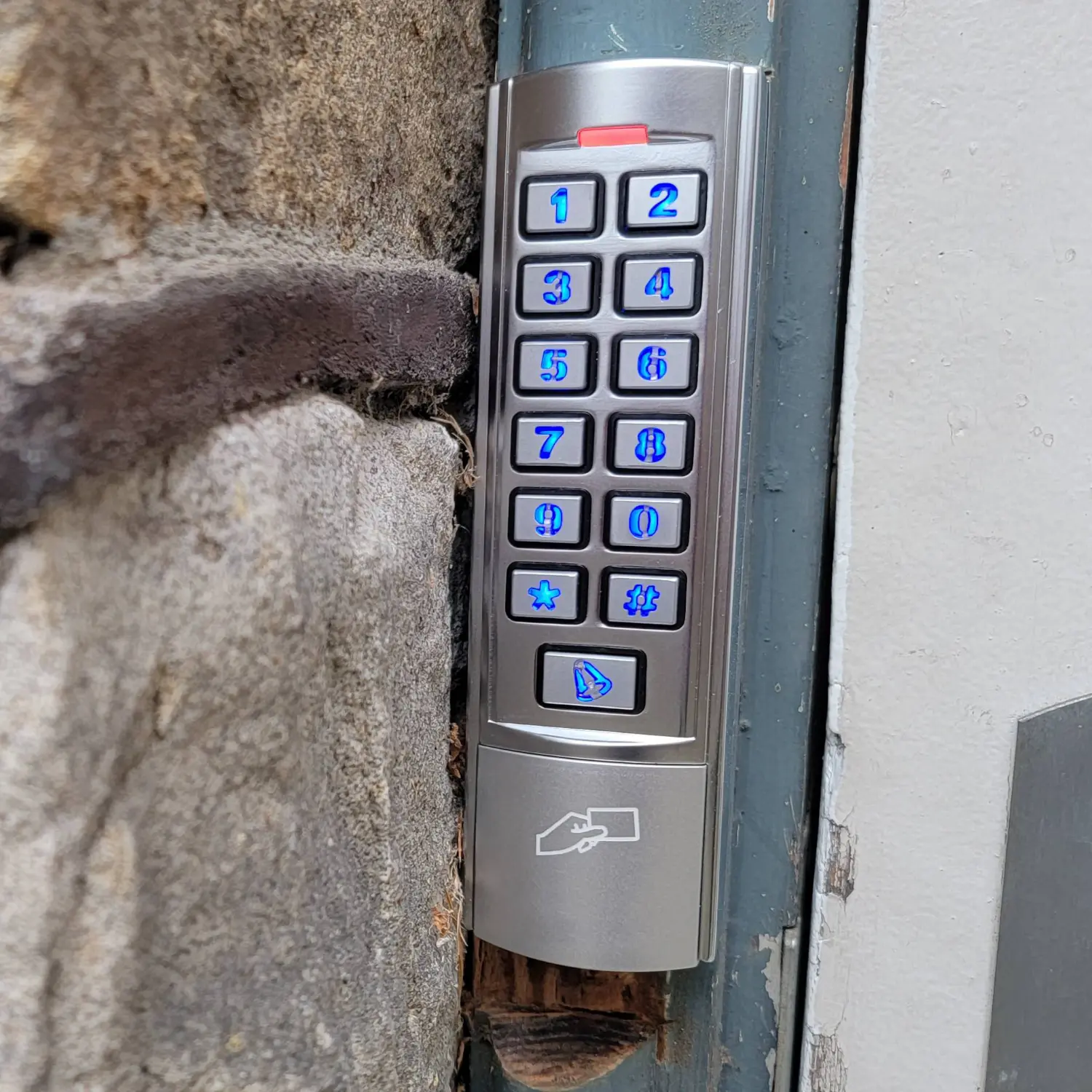
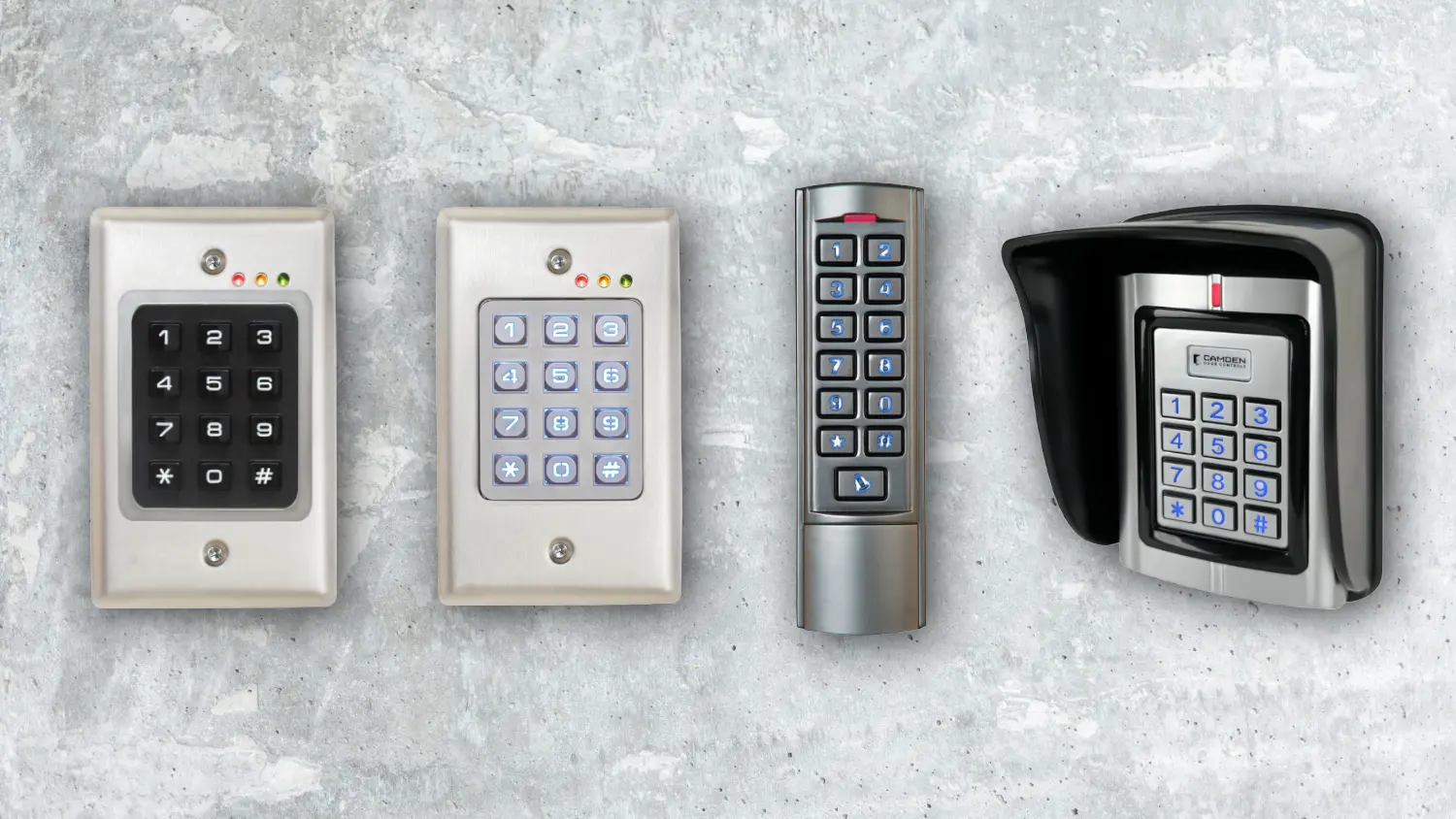
CM-110 and CM-550: surface-mount keypads with IP68 protection, metal keys and support for up to 20,000 users. The high protection rating makes these series suitable for both indoor and outdoor applications, such as a main entrance exposed to the weather.
CM-120: the keypad with stand-alone, Wiegand and wireless operation, supporting up to 999 user codes. That flexibility in control makes it suitable both as a standalone solution for a single door and as part of a broader access control system via Wiegand integration.
CM-1200/2200: the key switches in stainless steel, with various switching configurations for indoor and outdoor use. Where a keypad requires remembering a code, a key switch offers the familiar, physical simplicity of a key, but in a version that withstands intensive use and outdoor conditions.
Why the choice depends on who needs access
For spaces with a fixed, small group of users, such as a server room only IT staff enter, a key switch is often simpler to manage: a limited number of physical keys, issued to a known group. For spaces with changing or larger groups of users, such as a main entrance with staff turnover, a keypad is more practical: codes are easy to change or revoke without replacing a lock.
More than just offices
The same trade-off between a keypad and a key switch comes up in similar situations outside the office environment: technical rooms in healthcare facilities, staff entrances at shops and hospitality venues, and shared storage areas in business centres. Anywhere access needs to stay limited to a specific group without the investment of a full badge system, this combination offers a practical alternative.
What this means for installation
For installers fitting these solutions into an existing building, connecting to the existing door automation is usually straightforward: both product lines are designed to function as a replacement for or addition to an existing activation button, without requiring changes to the door operator itself. For a business centre like the one in the example above, this allows for a phased rollout: common areas first, then per tenant on request.
Part of a broader access system
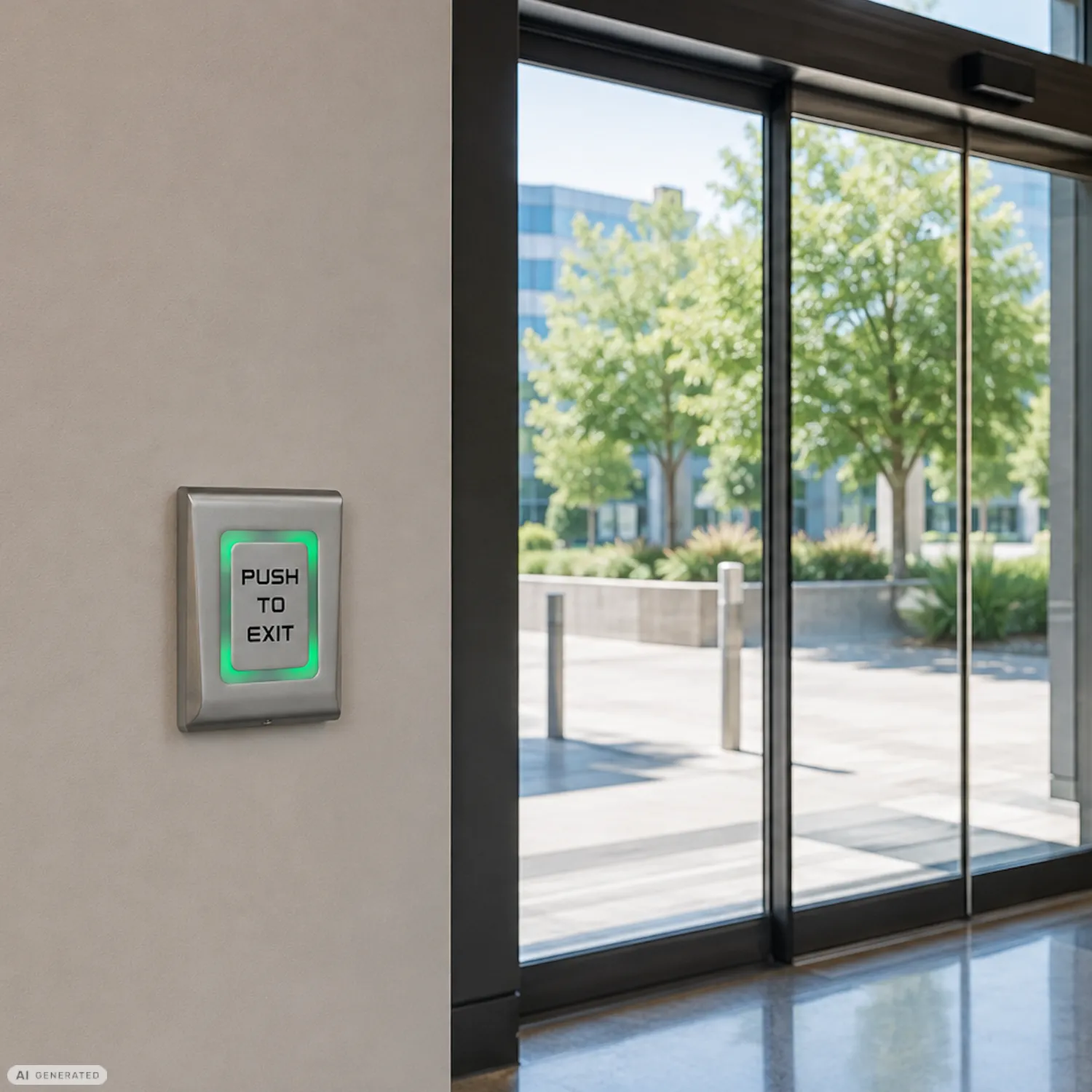
Keypads and key switches, together with vandal-resistant push buttons and touchless switches, form a complete range of access solutions, where the choice per door is determined by who needs access and under what conditions.
Secumatic supplies the CM-110/550, CM-120 and CM-1200/2200 as Camden's European distributor, with support on specification and project advice for installers and technical service providers. View the CM-110/550 surface-mount keypads, the CM-120 access control keypads or the CM-1200/2200 key switches, or get in touch for advice on the right choice for your project.