

Touchless Switches for Door Activation in Healthcare and Hygiene-Critical Environments
Hygiene as a design requirement, not an afterthought
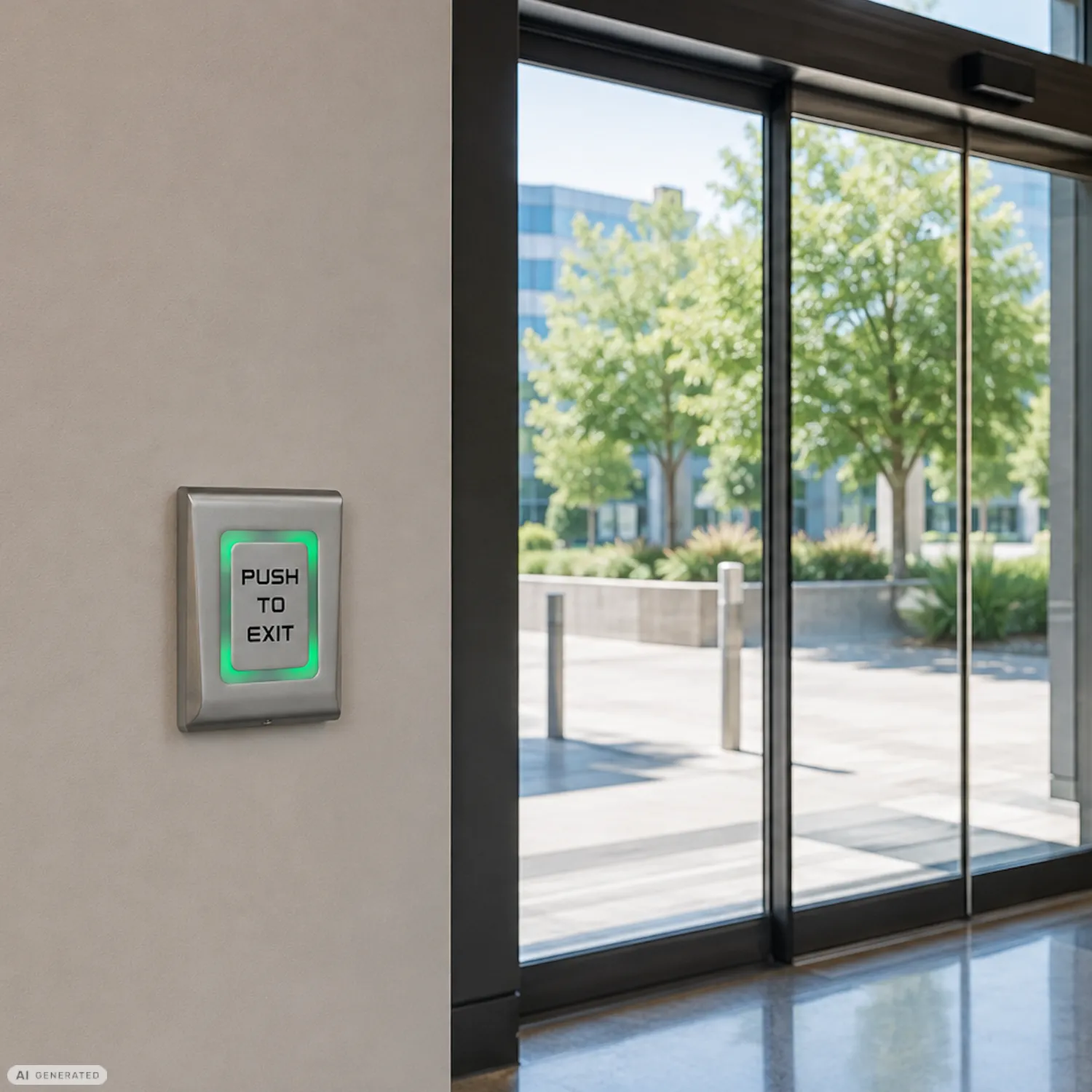
In a healthcare building, a door is never just a door. Every handle and every push button gets touched dozens to hundreds of times a day by staff, patients and visitors. In an environment where infection prevention is a hard requirement, every avoidable point of contact matters. At the same time, that same door still needs to open smoothly for a nurse pushing an IV pole, a wheelchair user, or someone carrying sterile supplies with both hands full. Facility managers and installers in healthcare face a dual challenge: hygienic and accessible, without either one getting in the way of the other.
The story of a ward under review
Picture a facility manager responsible for infection prevention on a hospital ward. During the latest hygiene audit, one recurring finding stands out: the push buttons at airlocks and treatment rooms consistently score poorly on bacterial contamination, despite a strict cleaning schedule. The cause isn't sloppiness: it's the button itself. With dozens of touches per hour, physical contact always outpaces even the most rigorous cleaning routine.
The solution this manager needs has to meet three requirements at once: the point of contact has to disappear entirely, the system has to fit into the existing door installation without a costly full replacement, and it has to be just as reliable as the button it replaces. A failure-prone solution isn't an option in a healthcare setting, since a door that won't open during an emergency is not a theoretical risk but a real one. That's exactly the problem touchless door activation solves.
Broader than hospitals alone
The same challenge extends well beyond the ward in this example. Operating rooms, isolation rooms, laboratories, dental practices and nursing homes all share the same combination of high traffic and strict hygiene requirements. Touchless activation is also gaining ground outside healthcare: high-traffic office buildings, laboratories outside the medical sector, and public buildings where hygiene is playing an increasingly prominent role in access design.
Two Camden solutions for this challenge
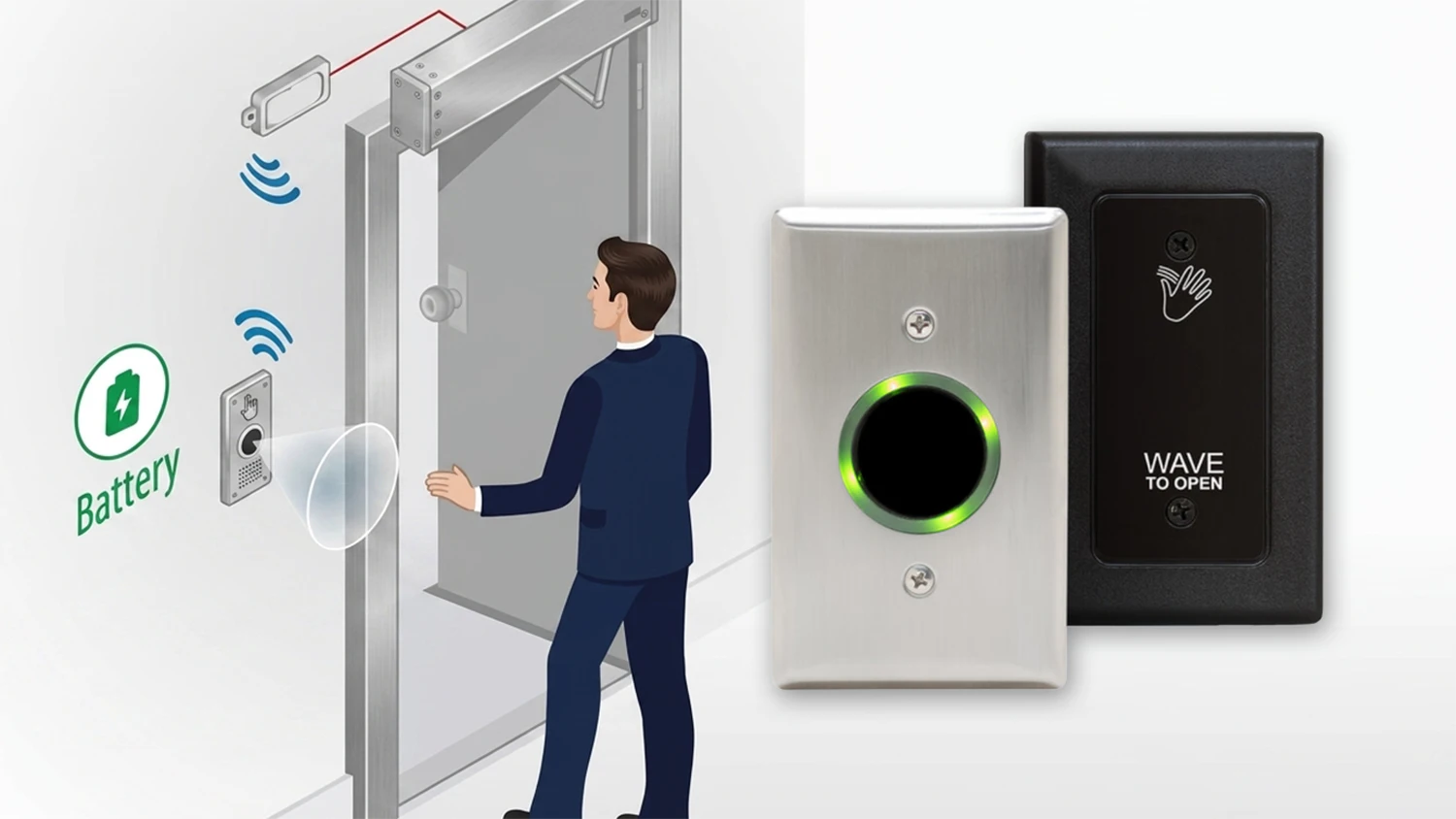
SureWave: the flexible, rugged choice for projects where conditions vary. Suited to both indoor and outdoor use, with active infrared microburst sensing that keeps detecting reliably across a range of environmental conditions. Available in wired and wireless versions (with Lazerpoint RF™ on selected models), and rated for -20°C to +85°C, relevant for entrances and covered walkways. For the facility manager in this example, the wireless version is particularly attractive: no major rewiring required, which significantly simplifies a renovation project within an operational ward.
ValueWave: the compact, affordable option when a project needs to fit out multiple doors at once without letting the budget escalate. The same hygienic, touchless operation based on active infrared detection, in a more entry-level design with a professional stainless steel finish that suits the look of a modern healthcare facility. For internal doors, airlocks and treatment rooms within the same building, this is often the more practical choice at higher volumes.
What this means for installation
Both series run on 12-24V AC/DC with an SPDT relay, connecting to the control logic most automatic door systems already use. For the installer, that means a predictable process: no changes to the door operator itself, no custom work per door, and a repeatable installation process for projects fitting multiple doors with touchless activation at once. On a renovation project within an operational healthcare ward, where door downtime quickly causes operational disruption, that difference between a standardised replacement and a bespoke project job is often what decides the schedule.
The adjustable detection range on both series isn't a minor detail either: in a narrow airlock, you want to avoid the sensor triggering too early on traffic passing in the corridor next door, while a wide main entrance calls for a broader detection zone. That adjustment happens per installation, without needing a different model.
Part of a larger system
Touchless switches rarely stand alone. Both SureWave and ValueWave are designed to integrate with existing automatic door systems and access control infrastructure, not as a standalone product but as part of the broader picture of an accessible, hygienic and secure building. For a project that also requires access control, key switches or emergency call systems alongside touchless activation, that's worth factoring into the design: one supplier, one point of contact, mutually compatible components instead of a patchwork of separate solutions from different brands.
From isolated problem to structural solution
For the facility manager in this example, the outcome of the next audit changes fundamentally: the contact point that kept showing up in the report simply no longer exists. For the installer, it's a solution that fits into existing work rather than a reason to replace the entire door system. And for patients and staff, it's a door that responds without anyone needing to think about it. Exactly as it should be in an environment where attention needs to stay on care, not on the door.
Secumatic supplies the full SureWave and ValueWave range as Camden's European distributor, with support on specification and project advice for installers and technical service providers. View the SureWave touchless switches or the ValueWave touchless switches, or get in touch for advice on the right choice for your project.